
Venezuela’s Gross Domestic Product (GDP) grew by 7.07% in the fourth quarter of 2025 compared to the same period the previous year, according to the Central Bank of Venezuela (BCV).
For the entire year, GDP increased 8.66%, marking nineteen consecutive quarters of expansion, according to the official data.
The growth was driven by both oil and non-oil sectors, signalling what the government describes as a sustained economic recovery.
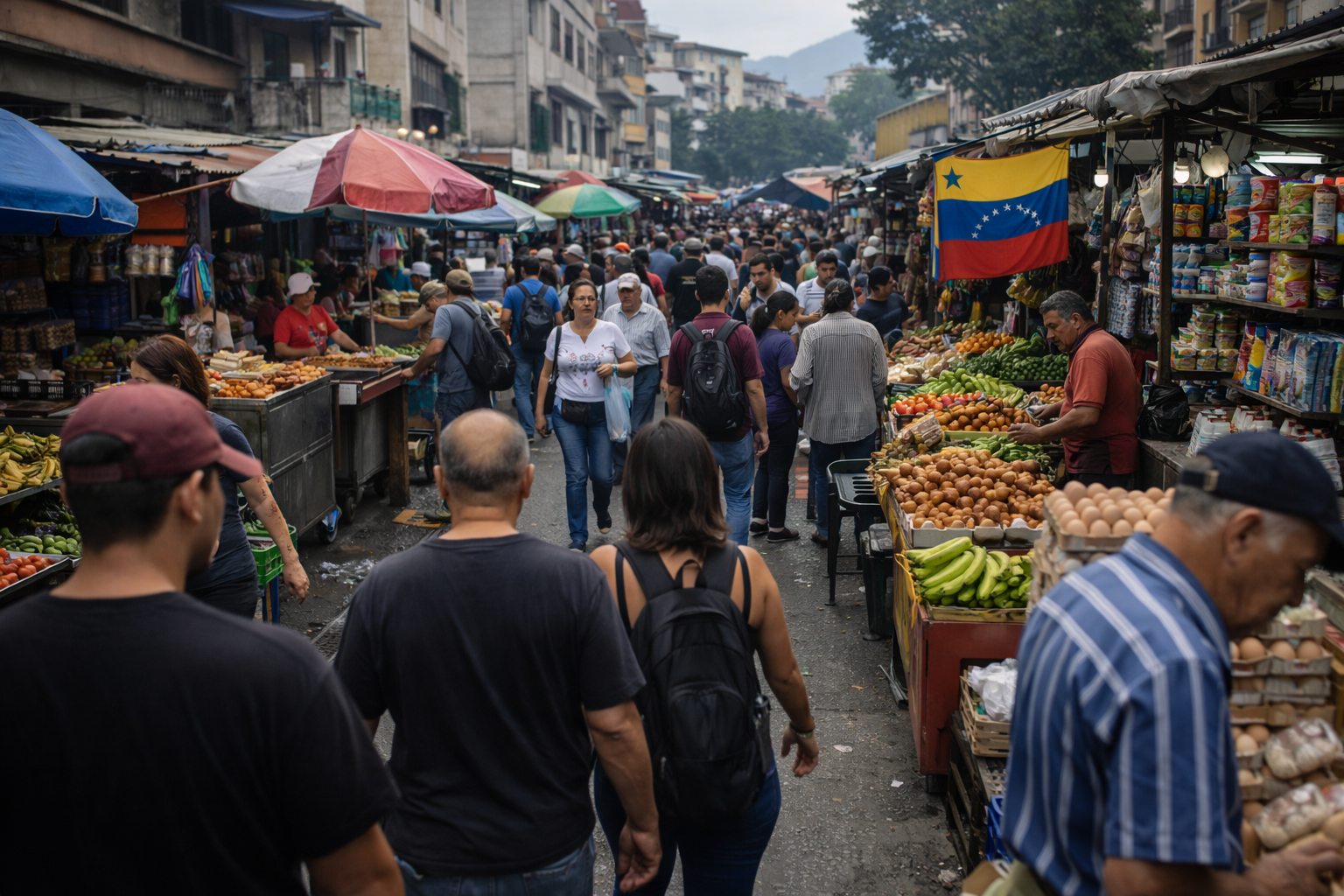
However, experts caution that these figures may overstate the true economic reality, particularly for Venezuelans experiencing daily challenges in purchasing power and access to goods.
Since 2019, Venezuela has released economic statistics irregularly, with long gaps in official data reporting.
In exclusive comments to Invezz, economist Aldo Contreras offered his perspective on the implications of these numbers.
Important growth drivers
Both oil and non-oil activities showed a significant increase, according to the BCV:
• The oil industry expanded by 13.41%, highlighting its contribution to the public revenue.
• Non-oil sectors expanded by 5.30%, with strong gains in construction (19.27%), mining (19.25%), lodging and food services (8.17%), commerce (7.21%), transportation (6.95%), manufacturing (6.05%), financial services (5.85%), education and health (5.53%), and agriculture (5.10%)
According to the bank’s official statement, industries including manufacturing, construction, mining, and agriculture enhance value chains and offer potential for sustainable growth.
Economic growth not reflected in living standards
In an exclusive interview with Invezz, the Venezuelan economist and professor at the Universidad de Los Andes (ULA), Aldo Contreras explained that:
“The economy has contracted 75% over the last 11 years. The nominal GDP 11 years ago was $460 billion; this year it may reach only $122 billion. That is far from having a real impact on Venezuelans’ wallets. The GDP per capita has fallen from $15,500 to around $3,000 annually. For the economy to return to its previous size, it would need to grow 20–25% per year for at least six years.”
Even while official growth numbers indicate a favorable trend, he said, Venezuelans are unlikely to see any noticeable change in their everyday lives due to the contraction over the previous ten years.
“Currently, Venezuela’s total GDP is comparable to that of a city like Bogotá or Medellín in Colombia. That helps explain why even with growth on paper, people may not perceive better living conditions,” the expert added.
Is this a solid recovery or a fragile rebound?
Addressing the sustainability of the growth, Contreras cautioned that headline GDP figures alone do not prove a resilient recovery:
“The Central Bank publishes the headline numbers, but it does not release disaggregated statistics for these 19 quarters to analyze each macroeconomic variable individually. This opacity makes it difficult to provide a precise opinion.”
He emphasized that a true, sustainable recovery requires more than paper growth:
“While oil contributes to the inflow of resources, non-oil sectors like construction, manufacturing, mining, and agriculture generate internal chains that strengthen the economy. But the lack of detailed data prevents us from fully understanding whether this expansion is robust or fragile.”
The non-oil sector as a stabilizing factor
The significance of non-oil industries in generating jobs, supply chain connections, and overall economic activity was also emphasized in the BCV report.
Growth in manufacturing, mining, and construction, according to analysts, can give the economy a more stable base and possibly lessen the volatility of oil-dependent income.
However, Contreras cautioned that GDP growth must be translated into increased income, improved services, and job creation rather than just statistical expansion if citizens are to see true economic gain.
Difficulties in the face of global pressures and sanctions
Increased international sanctions, which have hindered economic dealings and restricted Venezuela’s access to financing, contributed to the growth figures.
Experts like Contreras underline that GDP growth does not automatically overcome the structural and external constraints that continue to impede the Venezuelan economy, despite the BCV’s emphasis on resilience.
What’s ahead?
Although statistics on Venezuela’s economy are positive, the true test will be if growth results in genuine benefits for the populace. In his exclusive remarks to Invezz, Contreras stated:
“Growth must be accompanied by policies that improve employment, income distribution, and productivity across sectors if it is to truly impact people’s lives.”
Even though there has been growth for 19 straight quarters, it will need consistent growth, open data reporting, and structural changes that go beyond oil earnings to bring about a recovery that Venezuelans can experience on a daily basis.
The post Explainer: Has Venezuela’s economy recovered amid sanctions? appeared first on Invezz
